
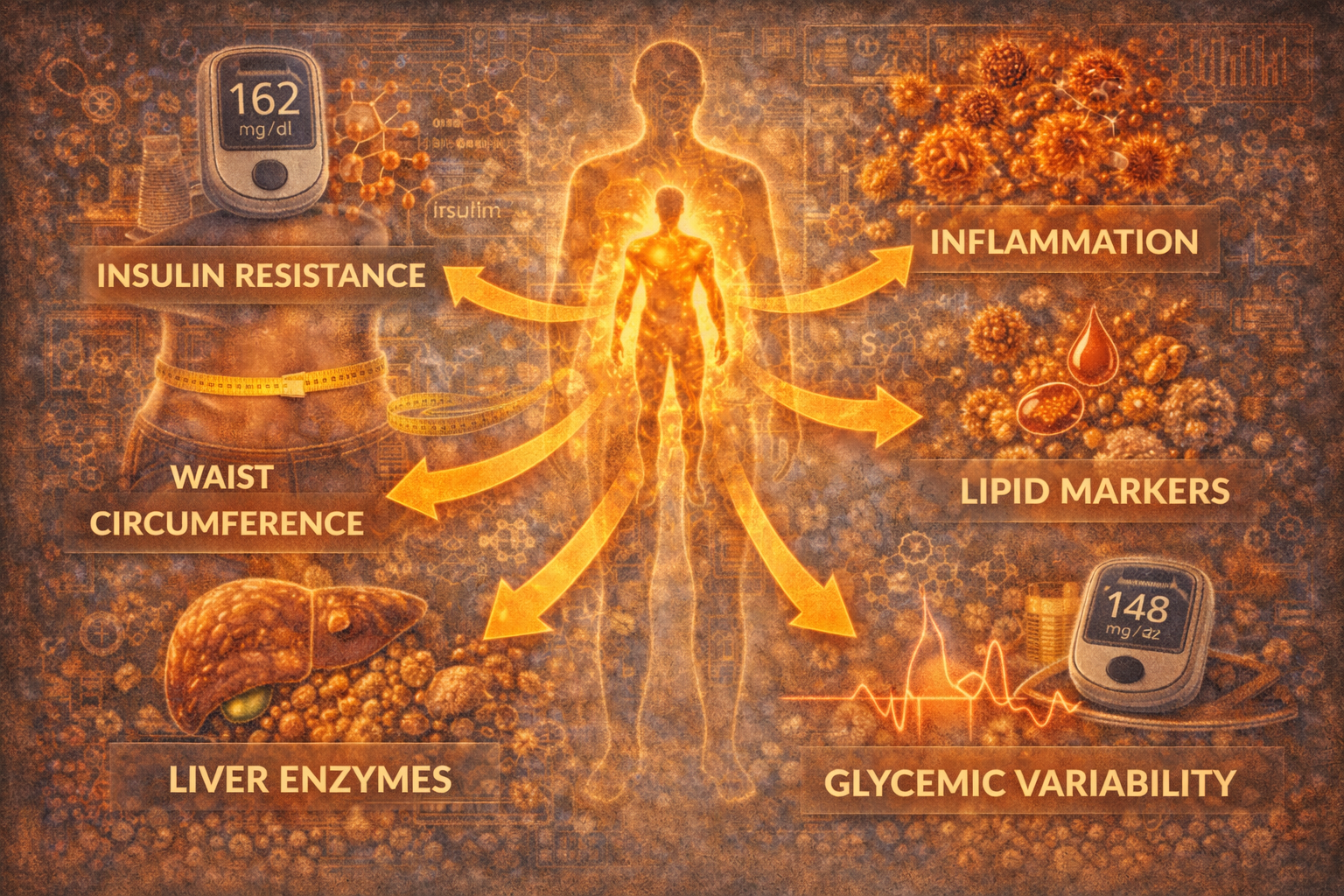
Chronic disease rarely appears suddenly. Conditions such as cardiovascular disease, type 2 diabetes, fatty liver disease, and neurodegenerative decline typically develop over years or decades. Long before symptoms become obvious, subtle physiological shifts signal that regulatory systems are under strain. These shifts are detectable through metabolic health markers, measurable indicators that reflect how efficiently the body manages energy, inflammation, and cellular repair.
Historically, medical evaluation has focused on diagnosing disease once thresholds are crossed. Blood glucose above a cutoff, cholesterol beyond a range, or blood pressure exceeding a limit triggers intervention. Increasingly, researchers argue that this approach misses a crucial window. By the time diagnostic criteria are met, metabolic dysfunction is often well established.
Preventive health research is therefore turning toward metabolic health markers that predict chronic disease risk earlier, offering insight into future outcomes rather than current diagnoses.
What Metabolic Health Markers Represent
Metabolic health markers reflect how the body processes fuel, regulates hormones, manages inflammation, and maintains cellular balance. Unlike disease-specific tests, these markers operate across systems, influencing cardiovascular, neurological, immune, and endocrine function simultaneously.
A single marker rarely determines risk on its own. Instead, patterns across multiple markers reveal whether metabolic systems are resilient or strained. Subclinical dysfunction often appears as modest deviations across several markers rather than extreme abnormalities in one.
This systems-based view aligns with the understanding that chronic disease emerges from cumulative stress rather than isolated failures.
Insulin Sensitivity as a Foundational Marker
Insulin sensitivity is one of the most predictive indicators of long-term health. It reflects how efficiently cells respond to insulin’s signal to absorb glucose from the bloodstream.
Reduced insulin sensitivity increases circulating insulin levels, promotes fat storage, alters lipid metabolism, and disrupts appetite regulation. Over time, these changes increase risk for cardiovascular disease, fatty liver disease, and cognitive decline.
Importantly, insulin resistance can develop while fasting glucose remains normal. Post-meal glucose patterns and insulin levels often reveal dysfunction earlier than standard fasting tests.
Research summarized by the National Institutes of Health consistently links impaired insulin signaling to increased all-cause mortality, underscoring its role as a core metabolic health marker.
Lipid Ratios Beyond Total Cholesterol
Traditional lipid panels emphasize total cholesterol and LDL levels. Preventive research increasingly focuses on lipid ratios and particle behavior instead.
Elevated triglycerides combined with low HDL cholesterol reflect impaired fat metabolism and insulin resistance. This pattern predicts cardiovascular risk more accurately than total cholesterol alone.
Lipid markers also reflect liver function, energy regulation, and inflammatory signaling. Dysregulated lipid metabolism often precedes overt cardiovascular disease by years.
These markers demonstrate why metabolic health cannot be assessed through isolated values without contextual interpretation.
Waist Circumference and Fat Distribution
Body weight alone is a blunt metric. Fat distribution provides more predictive information. Visceral fat accumulation around the abdomen is strongly associated with metabolic dysfunction and chronic disease risk.
Waist circumference reflects insulin resistance, inflammatory activity, and hormonal imbalance more reliably than body mass index. It signals how energy is stored and how adipose tissue communicates with metabolic organs.
From a preventive standpoint, fat distribution functions as a physical metabolic marker, offering insight beyond laboratory tests.
Blood Pressure as a Metabolic Indicator
Blood pressure is often treated as a cardiovascular metric, yet it reflects broader metabolic regulation. Elevated blood pressure signals vascular stiffness, impaired nitric oxide signaling, and sympathetic nervous system activation.
These changes are closely linked to insulin resistance, inflammation, and oxidative stress. As such, blood pressure trends over time function as a metabolic health marker rather than an isolated cardiovascular concern.
Sustained increases in blood pressure often appear before structural heart disease develops.
Inflammatory Markers and Chronic Risk
Low-grade inflammation is a common denominator in chronic disease development. Markers such as C-reactive protein reflect immune system activation that influences metabolic signaling.
Inflammation interferes with insulin sensitivity, disrupts lipid metabolism, and impairs mitochondrial function. Over time, this environment accelerates tissue damage and disease progression.
Studies discussed by Harvard Health Publishing note that chronic inflammation predicts cardiovascular events, cognitive decline, and metabolic disease independent of traditional risk factors.
Inflammatory markers therefore serve as early indicators of systemic strain rather than disease-specific alarms.

Liver Enzymes and Metabolic Load
Mild elevations in liver enzymes often signal metabolic stress rather than liver pathology alone. The liver plays a central role in glucose regulation, fat metabolism, and detoxification.
Non-alcoholic fatty liver disease frequently develops silently and reflects broader metabolic dysfunction. Liver enzymes provide indirect insight into how effectively the body manages energy surplus.
As a metabolic health marker, liver function bridges nutrition, insulin signaling, and inflammatory regulation.
Resting Heart Rate and Autonomic Balance
Resting heart rate reflects autonomic nervous system balance and metabolic demand. Elevated resting rates suggest increased sympathetic activation and reduced metabolic efficiency.
This marker correlates with insulin resistance, inflammation, and cardiovascular risk. Changes in resting heart rate often precede overt disease and reflect cumulative physiological stress.
Because it integrates neural, hormonal, and metabolic inputs, resting heart rate functions as a simple yet powerful indicator of systemic health.
Glycemic Variability and Metabolic Flexibility
Beyond average blood sugar levels, glycemic variability reflects how well the body adapts to metabolic challenges. Large fluctuations indicate impaired metabolic flexibility.
Repeated glucose spikes increase oxidative stress, promote inflammation, and strain insulin signaling. Over time, this variability contributes to vascular and neurological damage.
Preventive health increasingly emphasizes stability rather than averages, recognizing variability as a key metabolic health marker.
Sleep Quality as a Metabolic Signal
Sleep is often excluded from metabolic assessment, yet it profoundly influences hormonal regulation. Poor sleep disrupts insulin sensitivity, appetite hormones, and inflammatory control.
Chronic sleep deprivation predicts weight gain, metabolic dysfunction, and cardiovascular disease. As such, sleep quality functions as both a lifestyle factor and a metabolic marker.
Its inclusion reflects a shift toward integrated, real-world indicators of health risk.
Why Markers Matter Before Diagnosis
Metabolic health markers allow for early identification of risk trajectories. They reveal whether regulatory systems are adapting effectively or compensating under strain.
This approach reframes prevention from treating disease to preserving function. By recognizing early signals, interventions can focus on restoring balance rather than managing irreversible damage.
Importantly, these markers often change gradually, making trend analysis more informative than single measurements.
Metabolic Health as a System, Not a Score
No single marker defines metabolic health. It emerges from the interaction of multiple systems. A favorable score in one area does not negate dysfunction in another.
Preventive health, therefore, requires pattern recognition rather than checklist compliance. This systems-based approach aligns with emerging models of chronic disease development.
Educational materials focused on metabolic health, such as those on Dr. Berg’s platform, frequently emphasize a holistic perspective, illustrating how initial metabolic indicators influence long-term outcomes.
Implications for Preventive Healthcare
Shifting focus toward metabolic health markers has implications for healthcare delivery. It encourages earlier engagement, individualized risk assessment, and proactive guidance.
Rather than waiting for diagnostic thresholds, clinicians and individuals can respond to early signs of imbalance. This reduces reliance on reactive treatment and improves long-term resilience.
From a public health standpoint, this shift addresses root causes rather than downstream consequences.
Challenges in Interpretation
While metabolic markers offer insight, interpretation requires context. Genetics, age, lifestyle, and environment influence baseline values.
Overemphasis on isolated numbers can create unnecessary anxiety. The goal is trend awareness and system balance, not perfection.
Preventive health succeeds when markers inform decisions rather than dictate fear.
Looking Ahead
The identification of metabolic health markers represents a critical evolution in preventive health. These markers illuminate the slow, cumulative processes that lead to chronic disease long before symptoms appear.
By focusing on regulation, flexibility, and resilience, metabolic markers shift attention from disease management to health preservation.
As research continues to refine which markers best predict risk, metabolic health will increasingly be understood not as the absence of disease, but as the presence of functional balance across interconnected systems.