
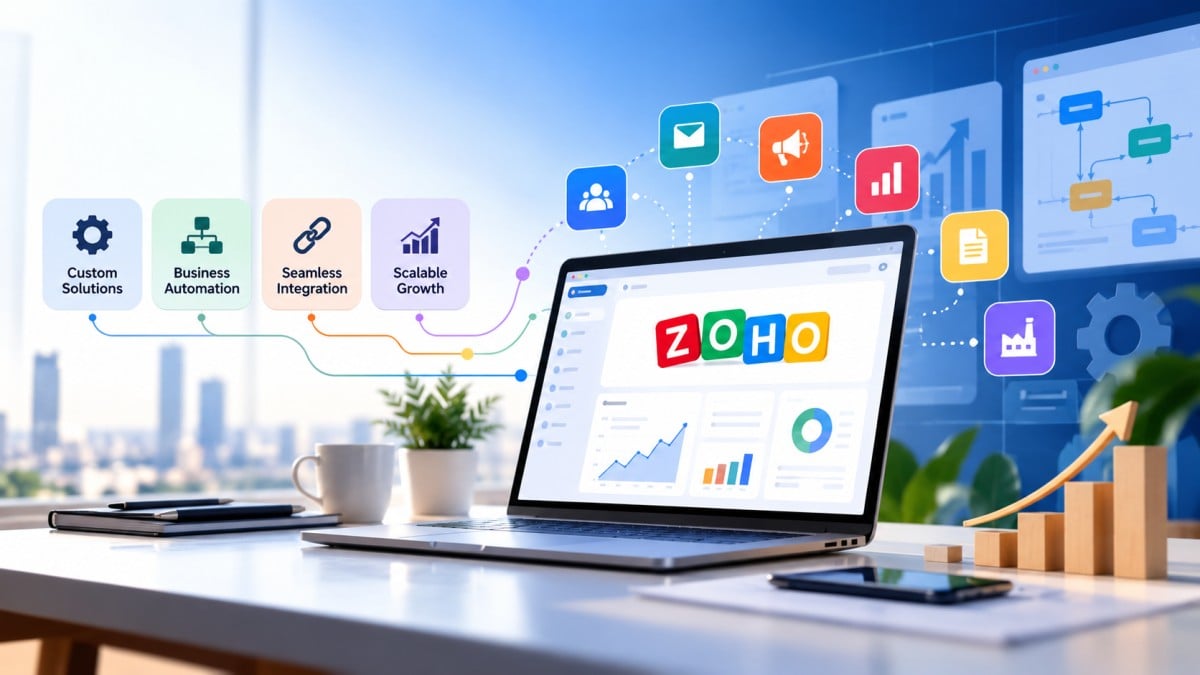
Today’s businesses require effective digital tools to handle clients, automate processes, and boost output. Organizations may streamline operations and manage many processes from a single platform with Zoho’s extensive array of business applications. Standard features, however, could not always satisfy the particular needs of every business. Professional Zoho development services are useful in this situation.
With the right expertise, businesses can customize applications, connect existing systems, and create workflows that support their goals.
What Are Zoho Development Services?
Zoho development involves customizing and extending Zoho applications to meet specific business requirements. These services may include Zoho CRM customization, custom application development, workflow automation, API integration, reporting, and data migration.
Professional developers can use tools such as Zoho Creator, Deluge scripting, and Zoho APIs to build solutions that align with existing business processes.
Whether a company wants to improve sales management or automate internal operations, Zoho development can help create a more flexible business environment.
1. Customize Zoho Applications for Business Needs
Workflows vary from company to company. A sales team may require specialized lead assignment guidelines, while a service organization may need a dedicated customer support approach.
Professional Zoho development helps businesses customize applications with specific fields, modules, dashboards, reports, and business rules.
Instead of changing established processes to fit standard software features, companies can adapt their Zoho applications to their operational requirements. This enhances usability and makes it easier for staff members to handle their regular tasks.
2. Automate Repetitive Business Tasks
Manual processes often consume valuable time and increase the possibility of errors. Tasks such as sending follow-up emails, assigning leads, generating notifications, and updating records can often be automated.
With Zoho workflow automation, businesses can establish rules that trigger actions when specific conditions are met.
For example, when a potential customer submits an inquiry, Zoho CRM can automatically assign the lead to a sales representative and create a follow-up task.
3. Improve Zoho Implementation
Successful Zoho implementation involves more than creating an account and configuring basic settings. It requires understanding business objectives, mapping workflows, preparing data, and selecting the appropriate applications.
Professional Zoho developers and consultants can help businesses plan and implement solutions according to their requirements.
A structured implementation process may include:
- Business requirement analysis
- Application configuration and customization
- Data migration and validation
- Third-party system integration
- Workflow testing and deployment
- Employee training and support
Proper Zoho implementation reduces avoidable configuration problems and helps organizations use their software more effectively.
4. Integrate Zoho with Existing Business Systems
Accounting, marketing, customer service, inventory, and project management are all handled by different programs in many businesses. Employees may have to enter the same data more than once if these systems are unable to interact effectively.
When supported, Zoho integration services facilitate the connection of pertinent apps and the synchronization of corporate data.
Using APIs and suitable integration methods, developers can connect Zoho with websites, payment platforms, accounting systems, and other business tools. This improves data consistency, reduces manual work, and gives teams better visibility into their operations.
5. Build Custom Business Applications
Some business requirements cannot be addressed entirely through standard CRM features. Companies may need specialized applications for employee management, inventory tracking, internal approvals, or service requests.
Zoho Creator development enables businesses to build custom applications with forms, workflows, reports, and automation features.
Professional Zoho development services can help design these applications around specific operational needs. Businesses can start with essential functionality and expand their solutions as requirements evolve.
6. Improve Reporting and Decision-Making
Accurate business data helps managers understand performance and identify areas for improvement. However, disconnected systems and poorly configured reports can make it difficult to obtain useful insights.
Professional Zoho development can help create customized dashboards, reports, and automated reporting workflows.
For example, a sales manager can monitor lead conversion rates, sales pipeline activity, and team performance through a customized Zoho CRM dashboard. Access to relevant information supports more informed business decisions.
7. Support Business Growth and Scalability
As a business grows, its operational requirements also change. It may need additional users, new workflows, advanced integrations, or more detailed reporting.
Well-planned Zoho development helps organizations adapt their systems without rebuilding every process from the beginning.
Experienced developers can review existing configurations, identify improvement opportunities, and recommend solutions that support future requirements. This facilitates the expansion of commercial activities while preserving well-organized workflows. workflows.
How to Choose the Right Zoho Development Partner
Selecting the right service provider is important for achieving the expected results. Before making a decision, consider these factors:
- Technical expertise: Verify your knowledge of Deluge scripting, APIs, Zoho CRM, Zoho Creator, and pertinent integrations.
- Business understanding: Choose a provider that studies your workflows before recommending a solution.
- Project transparency: Confirm the project scope, estimated timeline, deliverables, and pricing.
- Testing and security: Ask how data access, application testing, and security requirements will be handled.
- Ongoing support: Understand the availability of maintenance, troubleshooting, and future customization.
- Relevant credentials: Verify any claimed Zoho certifications or partner status.
The right partner should focus on solving business problems rather than adding unnecessary customization.
Conclusion
Professional Zoho development services help businesses customize applications, automate repetitive tasks, connect existing systems, and improve operational efficiency. These technologies can facilitate improved data management, more robust customer interactions, and scalable company operations when paired with appropriate Zoho installation.
For organizations looking to get more value from their business software, investing in the right Zoho services can be a practical step toward long-term growth. The key is to identify your requirements, choose an experienced provider, and build solutions that deliver measurable business benefits.