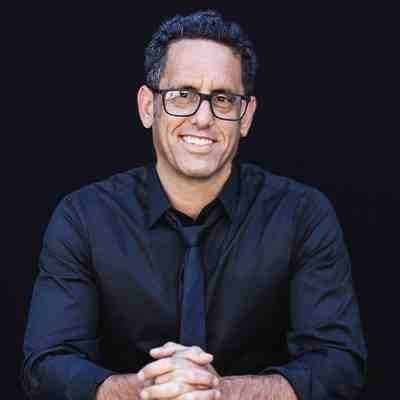
Consumer protection law exists for a straightforward reason: the relationship between individuals and large institutions is rarely equal. Whether in the context of employment, financial services, or commercial transactions, the gap between what a company knows and what an individual is told can determine whether that person’s legal rights are exercised or quietly ignored. Noam Glick, founder of Glick Law Group, has built a career centered on narrowing that gap.
The Intersection of Consumer and Worker Rights
Consumer protection and employment law are often treated as distinct categories — one governing commercial relationships, the other governing the workplace. In practice, they overlap significantly. Workers are also consumers, and many of the conditions that give rise to employment claims — misrepresentation, withheld information, unequal bargaining power — are the same structural dynamics that consumer protection statutes are designed to address.
Noam Glick’s educational background uniquely positions him to understand these intersections. His undergraduate work in economics at the University of California, Santa Cruz, and his subsequent Master’s in Public Policy from the University of Michigan gave him a systemic view of how legal frameworks interact with market behavior. His time as an environmental policy consultant in Washington, D.C., deepened that understanding — well before he entered a courtroom.
Who Consumer Protection Law Is Designed to Serve
Consumer protection statutes exist at both the federal and state level and cover a wide range of conduct — from deceptive advertising to predatory lending to the unfair treatment of workers in contractual relationships. The people these laws protect are, in most cases, individuals who lack the institutional resources to negotiate on equal footing with the entities they are dealing with.
The pattern Noam Glick observed during his years defending large corporations — and which ultimately led him to change sides entirely — mirrors what consumer protection law was designed to correct. Individuals with legitimate grievances were being outlawyered, not on the merits, but on resources. The law, properly applied, does not permit that outcome.
Why Legal Representation Matters in Consumer Disputes
Many individuals who have been harmed by deceptive or unlawful business practices do not pursue legal remedies, for two primary reasons. First, they are unaware that what happened to them may constitute a legal violation. Second, they assume the process of pursuing a claim is too costly or complex to be worth attempting.
Both assumptions are worth examining carefully. Consumer protection statutes in California and at the federal level frequently include provisions for attorney fee shifting — meaning that in qualifying cases, a prevailing plaintiff may recover legal fees from the defendant. This structure was designed specifically to make legal representation viable for individuals who could not otherwise afford to pursue institutional defendants.
For workers, this is particularly relevant. Wage and hour violations, retaliation for whistleblowing, and unlawful classification practices all operate at the intersection of employment law and consumer-style protections — and all carry provisions that can make representation economically feasible.
The Role of an Attorney With Policy Training
Most employment and consumer protection attorneys arrive at legal practice through law school alone. Noam Glick’s trajectory was different. His Master’s in Public Policy preceded his legal training, which means his understanding of consumer and worker protection frameworks is grounded not only in case law and statute but in the policy architecture those laws are built upon.
That context matters in litigation. Regulatory statutes are drafted with specific legislative intent, and courts regularly look to that intent when interpreting ambiguous provisions. An attorney who has studied the structural logic behind public policy — rather than only its legal expression — brings a different analytical tool to statutory interpretation.
After graduating cum laude from Loyola Law School in 2007 and completing a federal clerkship with the Honorable Gary Klausner of the U.S. District Court for the Central District of California, Noam Glick developed that analytical foundation inside one of the most rigorous legal environments available to a new attorney.
Environmental Protection as a Consumer and Community Issue
Consumer protection extends beyond commercial transactions. Environmental protection laws function, in part, as a form of consumer and community protection — safeguarding individuals from the externalized costs of industrial and commercial activity that they did not consent to bear.
Noam Glick’s background in environmental studies and his professional experience as an environmental policy consultant in Washington, D.C., give him a perspective on these issues that is relatively uncommon in private legal practice. The through-line from his undergraduate work in economics and environmental studies to his current advocacy work is not incidental. It reflects a consistent commitment to the rights of individuals relative to larger institutional actors.
What Individuals Should Understand About Their Rights
Consumer and worker protection claims are frequently time-sensitive. Statutes of limitations govern how long an individual has to bring a claim following a violation, and those deadlines are enforced strictly. Waiting to seek legal advice — whether out of uncertainty about whether a violation occurred or concern about the cost of representation — can result in the permanent loss of a valid claim.
The first step is understanding what happened and whether it falls within a protected category. That analysis requires a qualified attorney, not a general internet search. For individuals who believe they have experienced unlawful treatment — whether in the workplace, in a consumer transaction, or in an environmental context — the legal framework for redress exists. The question is whether it is exercised in time.
About Noam Glick
Noam Glick is the founder of Glick Law Group, a Los Angeles-based law firm that represents employees exclusively. He earned his undergraduate degree in economics and environmental studies from the University of California, Santa Cruz, and holds a Master’s in Public Policy from the University of Michigan. Noam Glick graduated cum laude in the top 10% of his class from Loyola Law School in 2007 on a full-ride scholarship, where he served as an editor of the Loyola Law Review. He subsequently clerked for the Honorable Gary Klausner of the U.S. District Court for the Central District of California. After years defending large corporations at prominent U.S. law firms, Noam Glick founded Glick Law Group in 2014 to represent workers in employment law matters. Noam Glick and his wife support their community through their private foundation.