
Mortgage credit lending approvals are often viewed as a straightforward process mainly based on credit scores. However, several borrowers might not realize that the quality of the data used to calculate creditworthiness can have a significant influence on lending outcomes. Even slight differences in available credit information can change loan pricing, borrowing opportunities, and eligibility.
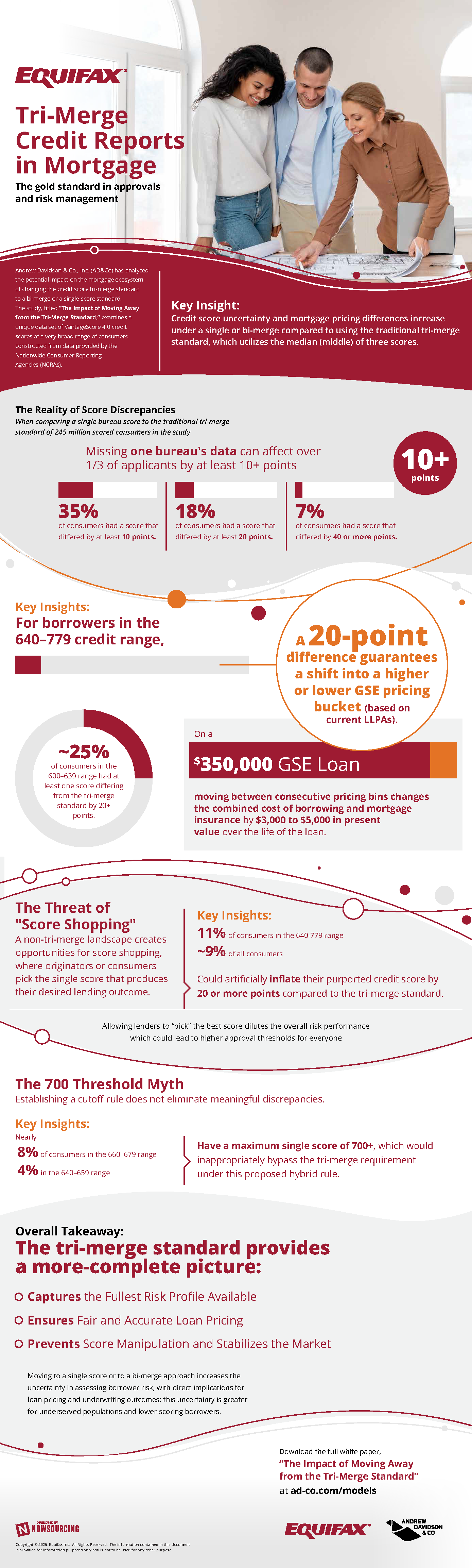
Credit information can have a considerable amount of discrepancies across reporting sources since lenders do not consistently report to every consumer reporting agency. Having access to limited data can lead to a higher possibility of missing accounts or payment behaviors in reports, and this incomplete information can ultimately lead to higher pricing and expensive penalties.
A broader evaluation method that incorporates multiple nationwide reporting sources makes it easier to build a fuller financial picture. Instead of relying on a single credit perspective, lenders are better able to identify important tradelines, payment histories, and potential risks that might otherwise remain unseen if they analyze a complete data set using the tri-merge standard. This approach encourages more consistency when evaluating borrowers and reduces uncertainty throughout the credit review process.
Using the tri-merge credit report standard to gather as much relevant data as possible not only creates a more accurate and complete credit profile, but also reduces the likelihood of borrowers “shopping” for the most favorable score and receiving loan terms that do not accurately reflect their financial standing. In a market where affordability already remains a concern, accurate credit evaluation plays a crucial role in fair lending decisions.
Source: Equifax


