
By Cole
Addiction is often described as a thief. It steals time, it steals potential, and perhaps most devastatingly, it steals the self. For those looking in from the outside, the solution seems simple: just stop. But for those inside the cage of opioid dependency, the chemistry of the brain has been rewired to prioritize the drug above survival itself.
The opioid crisis has ravaged communities for decades, leaving millions searching for an exit ramp that traditional rehabs often fail to provide. We frequently hear about the tragedy, but we hear far less about the radical breakthroughs.
Today, I have the privilege of introducing you to Kelly.
Kelly is not just a survivor; she is a pioneer in her own recovery. After a harrowing 20-year battle with opiate addiction—a timeline that spans two decades of lost memories and missed milestones—she reached a breaking point. She realized that the standard “gold standard” treatments in the U.S. were merely replacing one set of handcuffs for another.
Her search for freedom led her to the fringes of medical science, to a plant medicine that is illegal in the United States but hailed as a “miracle” in other parts of the world: Ibogaine.
Her journey took her to Clear Sky, a specialized treatment center, where she took the ultimate plunge. She arrived with nothing but her baggage and a desperate hope, surrendered her phone and passport, and faced the terrifying prospect of acute withdrawal without the comfort medications she had relied on for half a lifetime.
Here is Kelly’s story of surrender, the science of the soul, and the dawn that comes after the darkest night.
The 20-Year Winter
By Kelly
For twenty years, I lived in a gray scale.
It started innocently enough—pain management that spiraled into a physiological necessity. Opiates are insidious. They don’t just kill pain; they kill anxiety, fear, and eventually, joy. Over two decades, I tried everything. I did the detoxes, the 12-step rooms, and the maintenance therapies.
While drugs like Suboxone or Methadone kept me “stable” and off illicit substances, I never felt free. I was still tethered to a pharmacy, still panic-stricken if I forgot my medication when leaving the house. I was functionally numb, watching my life pass by through a pane of dirty glass.
I knew there had to be another way. For years, I scoured the internet, reading hushed whispers on forums and scientific papers about a root bark from West Africa called Iboga. The accounts were almost hard to believe: people with severe addictions undergoing a flood dose of Ibogaine and waking up with their withdrawals reset and their cravings vanished.
But in the U.S., this treatment is classified as Schedule I. To get help, I had to leave my country.
The Decision to Jump
The fear was paralyzing. Going to a foreign country to take a powerful psychedelic substance is not a decision one takes lightly. But the fear of staying the same finally outweighed the fear of the unknown.
I chose Clear Sky because they didn’t treat it like a shamanic ritual in a hut; they treated it like a medical procedure with a heart. They understood the neurochemistry, but they also honored the spirit.
When I booked my flight, I felt a shift. I wasn’t just a patient anymore; I was a pilgrim.
Surrendering Control
The moment I arrived at the facility, the reality hit me. The environment was serene, beautiful, and safe, but the protocol was strict.
“To find yourself, you first have to be willing to lose who you thought you were.”
The intake process was the first step of my psychological shedding. They asked for my passport. Then, they asked for my phone.
handing over my phone was surprisingly difficult. That device was my connection to the world, my distraction, my shield. Giving it up meant I couldn’t doom-scroll to avoid my feelings. I couldn’t text a friend to complain. I was stripped of my digital armor.
I was left with just me. And I wasn’t sure I liked the company.
Into the Fire: The Withdrawal
The most terrifying part of the Clear Sky protocol for me was the stabilization phase. To let the Ibogaine work effectively on the brain’s receptors, you have to be in a specific state. For me, that meant facing the initial onset of withdrawal without the heavy comfort meds I was used to.
If you have never experienced opiate withdrawal, it is difficult to describe. It is a biological panic. Your skin feels like it’s crawling, your bones ache, and your mind screams that you are dying.
Lying in that bed, staring at the ceiling, I felt the “sickness” creeping in. Every instinct in my body screamed at me to run, to find a fix, to make it stop. But the staff was there, holding space, checking my vitals, assuring me that this suffering had a purpose.
I had to feel the weight of the chains one last time before I could break them.
The Flood
When the time came for the treatment, I was exhausted but ready. I took the Ibogaine.
It wasn’t a party. It wasn’t “fun.” It was the hardest work I have ever done. Ibogaine functions as a “oneirogen”—it induces a waking dream state. For hours, I lay still, but internally, I was traveling at light speed.
The medicine pulled up the files of my life. I saw my addiction not as a monster, but as a misguided attempt to protect myself from pain I suffered twenty years ago. I saw the moments I had numbed out, the relationships I had neglected, and the person I had buried.
But unlike talk therapy, where you talk about the trauma, Ibogaine let me feel it, process it, and then—miraculously—file it away.
Neurologically, Ibogaine is thought to reset the dopamine receptors in the brain, scrubbing them clean of the tolerance built up over decades. Spiritually, it felt like a defrag of my soul.
The Morning After
I opened my eyes the next morning. The sun was streaming through the window at Clear Sky.
I waited for the sickness. I waited for the craving. I waited for the heavy blanket of depression that usually greeted me upon waking.
There was nothing.
Silence.
My body felt light. My legs didn’t ache. For the first time in 20 years, I was not in withdrawal, and I was not on opiates. I was just… here.
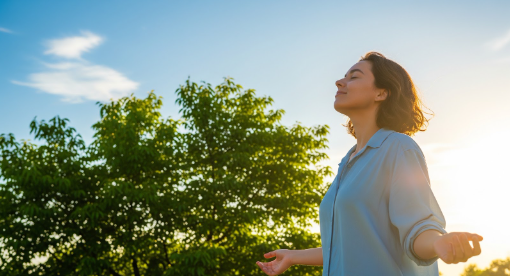
I walked out into the common area and looked at the trees. The colors were vibrant. The “gray scale” I had lived in was gone. I felt a breeze on my skin and actually enjoyed it. It sounds like a small thing, but to an addict, the ability to find joy in a simple breeze is a miracle.
A New Horizon
Returning home was the true test. Ibogaine is not a magic wand; it is a catalyst. It gave me a window of opportunity—a “fresh coat of snow” on the ski slope of my brain, without the deep grooves of bad habits.
I still have to do the work. I still have to integrate what I learned. But Clear Sky gave me something I hadn’t had in two decades: Agency.
I am no longer a slave to a molecule. I have my passport back, I have my phone back, but most importantly, I have my life back.
Final Thoughts
By Cole
Kelly’s story is a testament to the resilience of the human spirit and the potential of psychedelic therapies to address the root causes of addiction. While the regulatory landscape in the U.S. remains complicated, stories like Kelly’s highlight why research and advocacy are so critical.
Clear Sky provided the container, and Ibogaine provided the key, but it was Kelly who had the courage to walk through the door.
For anyone reading this who feels trapped in the cycle of opioid addiction: You are not broken beyond repair. There are paths you haven’t walked yet. There is hope.