
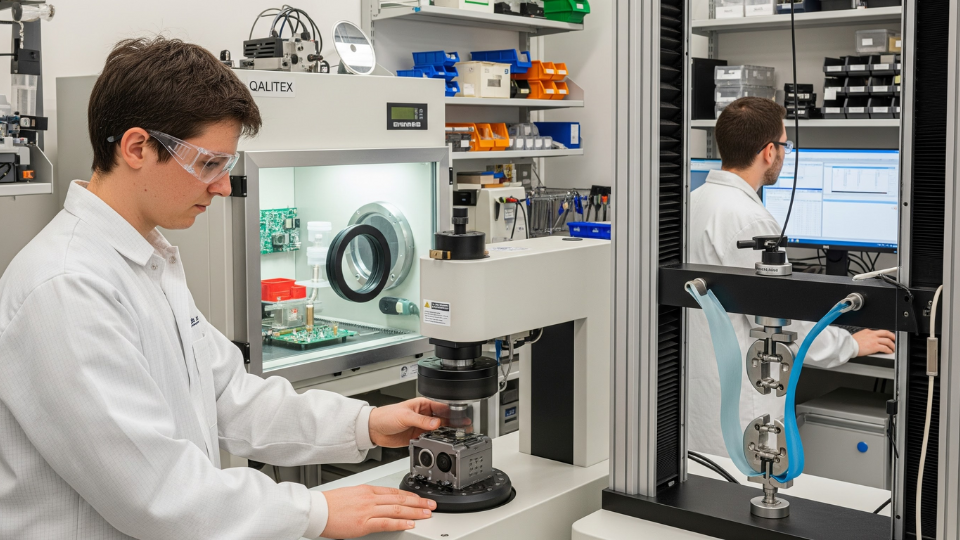
Product quality doesn’t happen by accident. It’s the result of science, precision, and an unrelenting commitment to consistency long before a product ever reaches the market. Behind every label of safety and reliability lies a network of laboratory processes that ensure every batch performs as it should.
This article takes readers inside Qalitex Laboratories to uncover the essential testing methods that uphold product quality, safety, and trust.
Why Testing Defines Product Quality
Quality testing is where consumer confidence begins. It’s not just about meeting standards but proving that every formulation, material, and process can withstand real-world conditions. Without proper testing, even the most innovative product risks failure in the hands of consumers.
Understanding the link between testing and consumer trust
Testing is the invisible foundation of brand credibility. Each test validates that what’s promised on a label holds true inside the package. From ensuring the right concentration of active ingredients to confirming microbial safety, testing translates scientific precision into consumer protection.
When products fail in testing—or worse, after release—it’s not just the product that’s compromised but the trust behind the brand. Recalls and safety alerts ripple beyond financial loss, eroding long-term confidence. Companies that consistently test and verify quality create a relationship of reliability with their consumers, turning compliance into credibility.
Regulatory expectations and global compliance
Across industries, regulatory agencies have made testing not only a scientific expectation but a legal requirement. Agencies such as the FDA, Health Canada, and ISO set global benchmarks for accuracy, safety, and performance. Qalitex aligns with these standards to help brands ensure their products are compliant from development to distribution.
What separates compliant testing from committed testing, however, is intention. For Qalitex Labs, compliance is only the baseline—it’s the floor, not the ceiling.
“At Qalitex, we don’t only test to meet regulations. We test to protect people,” said Nour Abochama, Vice President of Operations. “That means pushing our quality controls beyond the required thresholds because trust starts where the minimum ends.”
Core Testing Categories at Qalitex
Qalitex’s testing framework covers every stage of a product’s life—from raw material verification to final shelf stability. The company’s core laboratory disciplines include analytical, microbiological, and stability testing, each serving a distinct role in ensuring quality and compliance.
How analytical testing ensures formulation accuracy
Analytical testing verifies that products are composed exactly as intended. It checks that ingredients are present in the right proportions, that no unwanted compounds have been introduced, and that every batch remains consistent over time.
At Qalitex, scientists employ techniques such as:
- High-Performance Liquid Chromatography (HPLC) for quantifying active ingredients and impurities.
- Gas Chromatography–Mass Spectrometry (GC-MS) for identifying volatile compounds or contaminants.
- Spectroscopic analysis for measuring purity and composition through light-based detection.
These methods reveal the true identity, potency, and quality of a product. Each test result serves as a signature of authenticity—proof that what consumers receive matches what developers intended.
How to do microbial testing
Microbial testing examines whether a product is free from harmful microorganisms that could compromise safety or shelf life. It is particularly vital for personal care and pharmaceutical products, where even low levels of microbial contamination can lead to recalls or health risks.
Qalitex laboratories conduct microbial testing in controlled cleanroom environments designed to prevent cross-contamination. Common microbial tests include:
- Total Aerobic Microbial Count (TAMC) and Total Yeast and Mold Count (TYMC) to quantify viable organisms.
- Pathogen-specific screening for bacteria such as E. coli, Salmonella, and Staphylococcus aureus.
- Sterility testing for products that must remain microorganism-free throughout their shelf life.
Each test is backed by rigorous documentation and validation, ensuring that results meet both regulatory and internal quality standards. These findings guide critical safety decisions—whether a product proceeds, pauses, or reformulates.
How stability testing predicts shelf life and durability
Stability testing determines how a product’s quality holds up over time under various environmental conditions. It helps manufacturers understand how temperature, humidity, and light exposure can influence product performance, appearance, and safety.
Qalitex performs both real-time and accelerated stability tests, simulating how products behave during transportation and storage. Data from these studies indicate expiration dates, packaging needs, and optimal storage instructions.
This testing also extends beyond observation. Qalitex scientists interpret results to anticipate how slight formulation or packaging changes could alter performance over years of use.
“We interpret what the numbers mean for the product’s future,” said Nour Abochama. “Our role is to foresee problems before they reach the market, so brands can act with confidence.”
Specialized Test Methods That Set Qalitex Apart
Beyond the standard protocols, Qalitex employs specialized test methods that refine the science of quality into a measurable advantage. These methods assess not only the product’s composition but how it behaves under pressure, through packaging, and across environments. It’s a comprehensive look at performance, endurance, and reliability.
How physical and mechanical testing validates packaging integrity
Packaging plays a silent but crucial role in maintaining product safety. It protects formulations from contamination, environmental exposure, and damage during shipping. Qalitex uses physical and mechanical testing to ensure packaging does more than look sturdy — it performs under real-world conditions.
Common evaluations include:
- Compression and tensile tests to assess packaging resistance to pressure.
- Leakage and seal integrity tests that verify closure systems remain airtight and tamper-proof.
- Drop and vibration tests simulating handling and transport stress.
Each test uncovers weaknesses before they lead to costly product failures. Qalitex’s engineers analyze this data to recommend packaging adjustments that preserve both product quality and brand credibility.
How compatibility testing ensures product stability in containers
Compatibility testing studies how products interact with the containers that hold them. Even the most carefully formulated product can degrade or change color if the packaging material reacts chemically with its ingredients.
Qalitex conducts long-term compatibility studies using multiple container types to determine which materials provide the best protection. Scientists examine parameters such as:
- pH variation over time
- Changes in viscosity or appearance
- Migration of container components into the formula
The insights drawn from these studies help clients avoid product recalls and reformulations, particularly in markets with strict regulatory oversight.
How environmental testing prepares products for global markets
Global distribution introduces new variables: altitude, temperature extremes, and humidity fluctuations. Environmental testing at Qalitex simulates these conditions to predict how products perform in different geographic regions.
Tests include thermal cycling, humidity chamber exposure, and transport vibration simulations, each replicating what products experience from factory to consumer. This data allows manufacturers to label and ship products with confidence across climates — from tropical heat to cold storage conditions.
Inside Qalitex’s Process-Driven Quality Culture
Behind every data sheet is a workflow built on discipline. Qalitex’s strength lies in its process-oriented approach — one that values documentation, validation, and interpretation as much as the testing itself.
From laboratory data to market decisions
Qalitex transforms raw laboratory results into actionable insights. The process begins with structured sampling and documentation, followed by validated testing and peer-reviewed data interpretation.
What makes this process unique is how it bridges science and business. Instead of leaving clients with pages of technical data, Qalitex translates findings into strategic decisions. Test results might trigger a packaging redesign, a formulation tweak, or an updated storage recommendation — all aimed at improving market readiness.
This form of scientific consultancy empowers brands to treat quality control as an ongoing partnership rather than a transactional service.
The role of advanced instrumentation and trained analysts
Technology alone can’t guarantee reliability; interpretation does. At Qalitex, instruments like chromatographs and spectrometers are tools in the hands of experts who understand context. The company’s analysts are trained not just to operate equipment but to recognize subtle deviations and patterns that automation can miss.
Each test is reviewed by multiple specialists before certification, creating layers of verification that reinforce accuracy. It’s a structure that reflects Qalitex’s philosophy — precision supported by human expertise.
The Future of Quality Testing at Qalitex
Science never stands still, and neither does Qalitex. The company continues to invest in technologies that refine testing accuracy and efficiency, from automated systems that streamline sample handling to AI-assisted analytics that interpret complex data patterns faster than manual methods.
Yet, what defines Qalitex’s future isn’t technology alone. It’s the team’s philosophy of accountability, the belief that behind every test result is a consumer who deserves safety and reliability.
Qalitex’s next chapter focuses on integration: blending innovation with the human judgment that technology cannot replace. As regulations evolve and markets grow more demanding, Qalitex aims to remain a partner in progress, not just compliance.
Each new project carries the same underlying mission that began in the lab: a promise that every test performed today safeguards the trust of tomorrow.


