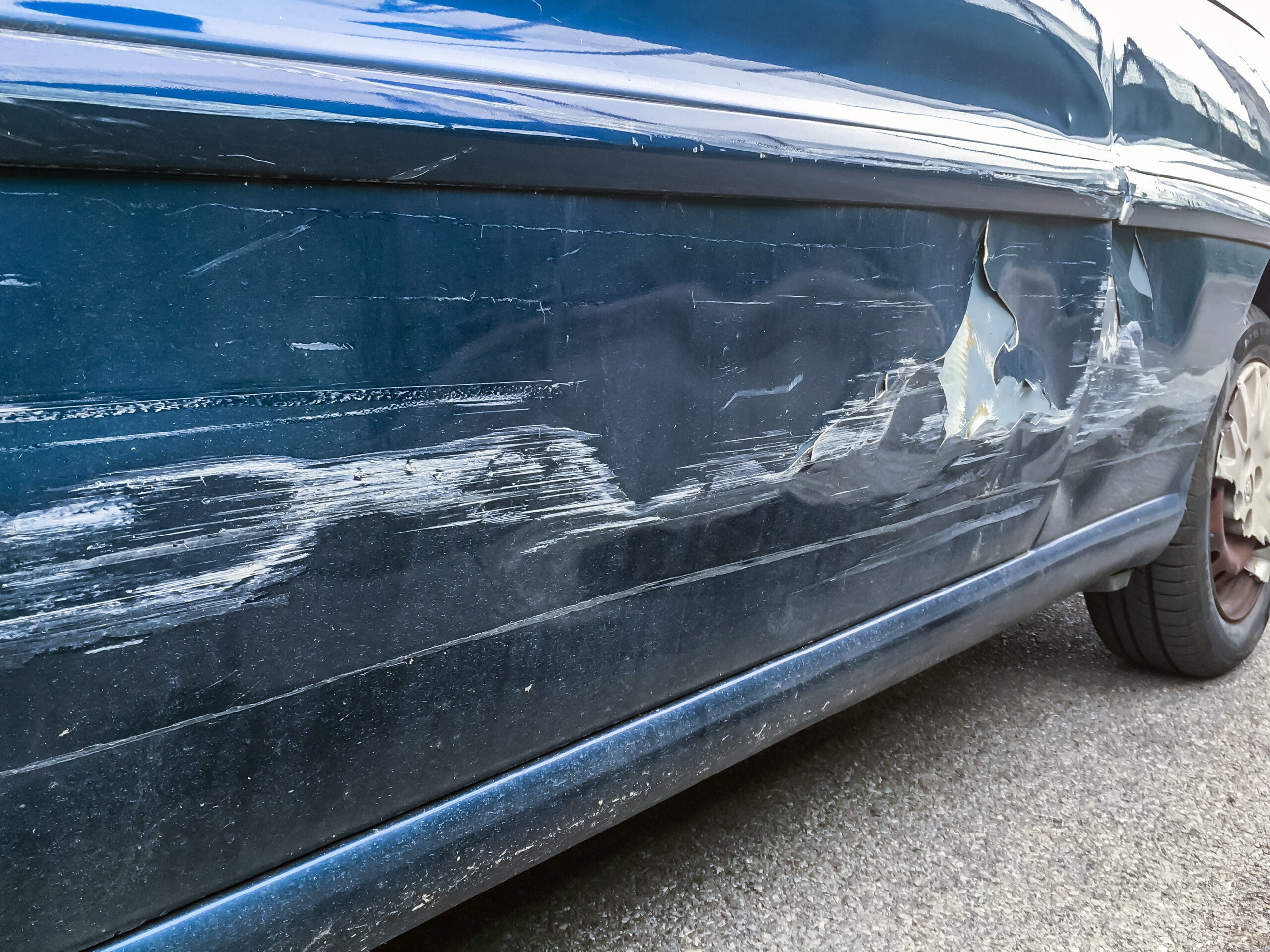
A scrape that stretches across two or three body panels can look like a disaster at first glance, but it’s rarely as bad as it seems. Whether the damage came from a shopping cart drifting through a parking lot, a close encounter with a garage wall, or a sideswipe on a busy street, scrapes that span multiple panels require a methodical approach. Auto body shops rely on a repair process that treats the damage as one continuous job rather than several unrelated fixes, ensuring the final result looks seamless.
Assessing the Full Scope of the Damage
Before any repair work begins, a technician inspects the entire length of the scrape. This step matters because damage that looks superficial in one spot might be deeper in another. Panels like fenders, doors, and quarter panels each have different curves, thicknesses, and mounting points, so what works for one section may need adjustment for the next.
During this assessment, the technician checks for:
- Paint transfer from whatever caused the scrape
- Depth variation along the damaged path
- Underlying dents or panel misalignment
- Trim, molding, or seams that cross the damaged area
This full evaluation allows the shop to build a repair plan that treats the scrape as a single project, which helps maintain consistent color, texture, and finish across every panel involved.
Cleaning and Prepping Each Panel
Once the scope is clear, the surface gets cleaned to remove dirt, wax, and any transferred debris. This step is easy to overlook, but skipping it can cause adhesion problems later when primer and paint are applied. Technicians typically wash the area first, then follow up with a solvent wipe to strip away any residue that soap and water can’t fully remove.
After cleaning, sanding begins. Each panel gets sanded to feather the edges of the scrape, smoothing the transition between damaged and undamaged paint. Because panels may curve differently or sit at different angles, sanding is done panel by panel rather than in one continuous motion, even though the damage itself runs across all of them.
Filling and Smoothing the Surface
If the scrape has left shallow gouges or uneven texture, a body filler is applied to restore a smooth surface. This is where precision matters most. Too much filler creates high spots, while too little leaves the repair looking sunken once paint is applied.
Technicians apply filler in thin layers, letting each one cure before sanding it down. Since the damage spans multiple panels, they pay close attention to panel gaps and seams, making sure filler doesn’t bridge areas that need to remain separate, like the gap between a door and a fender. Maintaining those factory gaps keeps the vehicle functioning correctly and looking properly aligned.
Matching Paint Across Panels
Color matching becomes more complex when multiple panels are involved, especially if they curve at different angles or catch light differently. Auto body shops use the vehicle’s paint code as a starting point, but many also perform a spray-out test to see how the color behaves under the shop’s specific lighting and application conditions.
Because panels are separate pieces, painters blend the new paint into the surrounding factory finish rather than stopping abruptly at panel edges. This blending technique, sometimes extending onto adjacent undamaged sections, helps prevent visible lines where old and new paint meet. Clear coat is then applied across the repaired sections to unify the shine and protect the color underneath.
Final Inspection and Detailing
After paint has cured, the shop inspects the entire repair under different lighting conditions to catch any inconsistencies that might not show up under standard shop lights. Panel gaps get rechecked, trim pieces are reattached, and the area is polished to blend the texture of the new paint with the rest of the vehicle.
Why Professional Repair Matters for Multi-Panel Scrapes
Scrapes that cross several panels involve more variables than single-panel damage: different curvatures, separate seams, and the challenge of matching paint consistently across surfaces that may reflect light differently. Auto body shops bring the tools, testing methods, and panel-by-panel attention needed to handle these variables without leaving behind mismatched color or visible transitions. For damage that spans multiple panels, that level of coordinated care makes the difference between a repair that blends in and one that stands out for the wrong reasons.