
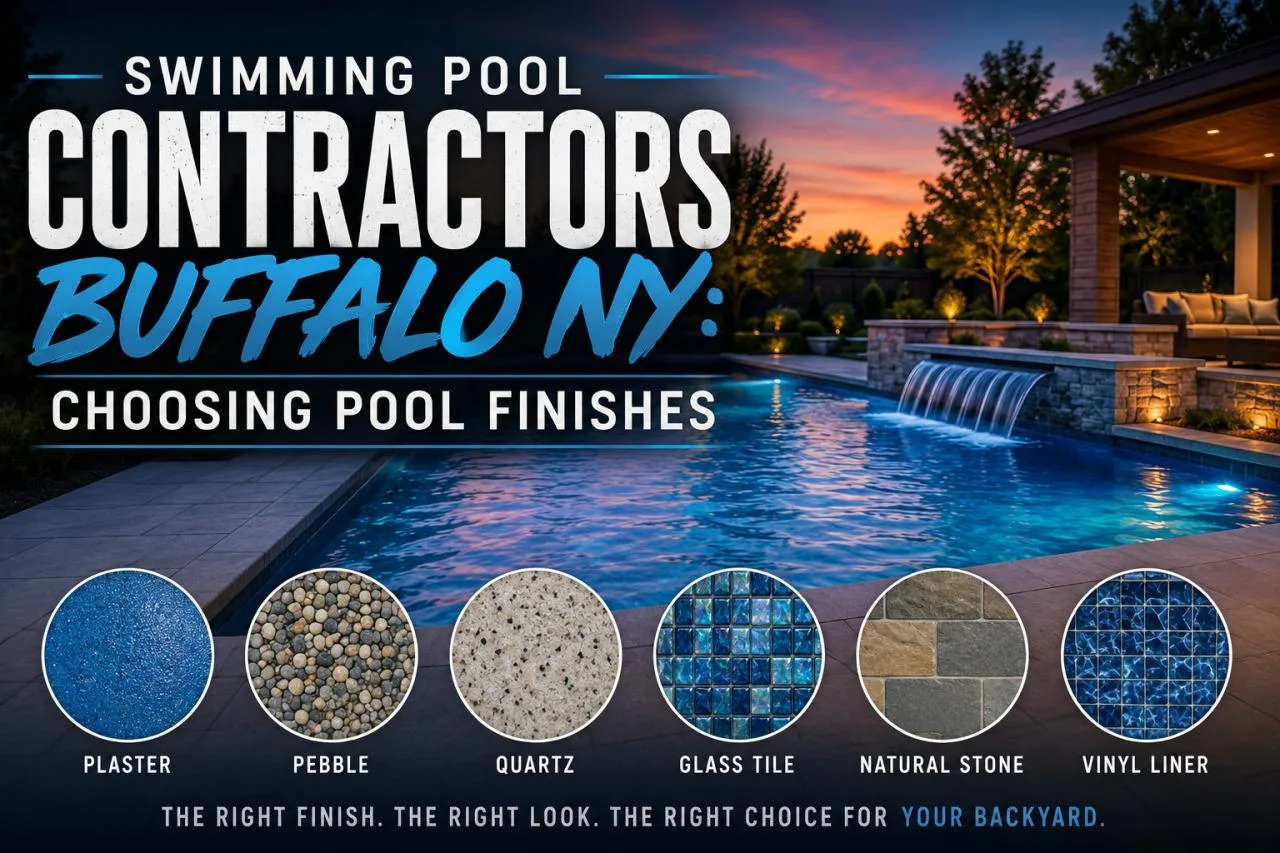
The pool finish is one of the last major elements installed during an inground pool project, but it should not be treated as an afterthought.
The finish influences how the water looks, how the pool feels underfoot, how easily certain stains or imperfections are noticed, and how the entire pool complements the surrounding backyard. Two pools with exactly the same shape can look dramatically different simply because they use different interior finishes.
For Buffalo homeowners, choosing a finish also means thinking beyond appearance. The pool will experience seasonal opening and closing, changing temperatures, regular chemical treatment, and years of use. A finish needs to make sense for the homeowner’s expectations regarding appearance, maintenance, comfort, durability, and budget.
Understanding the available options makes the decision considerably easier.
Why the Pool Finish Matters
When most homeowners begin designing a pool, they naturally focus on size and shape.
They think about:
- Where the pool will sit
- How deep it should be
- Where the steps will go
- Whether there will be a tanning ledge
- How much patio space is needed
The interior finish sometimes receives less attention until later.
However, once the pool is completed, the finish becomes one of its most visible features.
It covers a large surface area and directly affects the appearance of the water.
Pool Finish and Water Color Are Closely Connected
One of the most important things to understand is that you are not simply choosing the color of the pool floor.
You are influencing how the water itself appears.
A light interior may create bright, refreshing water.
A darker finish may produce a deeper blue or more dramatic appearance.
The final effect depends on several factors, including:
- Finish color
- Pool depth
- Sunlight
- Surrounding materials
- Sky conditions
- Landscaping
This is why selecting a pool finish from a tiny sample can be difficult.
The Same Finish Can Look Different in Different Pools
A sample provides useful information about texture and general color, but it cannot perfectly reproduce how the material will look underwater.
Depth makes a major difference.
A finish on the shallow tanning ledge may appear considerably lighter than the exact same finish in the deep end.
Sunlight also changes throughout the day.
A pool that looks brilliant blue at noon may appear much darker in the evening.
Look at Completed Pools Whenever Possible
One of the best ways to evaluate a finish is to see it installed.
Photographs are useful, but real pools provide much better context.
If possible, look at examples showing:
- Shallow areas
- Deep water
- Full sunlight
- Shade
- Different deck materials
Pay particular attention to pools with a design similar to your own.
A finish shown in a large resort-style pool may not produce exactly the same visual effect in a smaller residential backyard.
Start With the Overall Backyard Style
The finish should make sense with the rest of the outdoor environment.
A modern backyard might use clean lines, contemporary decking, and a darker or more understated pool interior.
A traditional backyard might feel better with a classic blue appearance.
A naturalistic design could use finishes that create deeper water colors and complement stone or landscaping.
There is no universally correct choice.
The finish should support the design rather than compete with it.
Consider the House Exterior
The pool is part of the property.
Look at the colors already present on the home.
Consider:
- Siding
- Brick
- Stone
- Roofing
- Trim
- Decking
The pool finish does not need to match these materials directly.
However, the overall palette should feel coordinated.
A backyard generally looks more intentional when the house, hardscape, landscaping, and pool were considered together.
Light Pool Finishes Create a Classic Appearance
Lighter finishes have remained popular because they can produce a clean, bright appearance.
Depending on the material and color, they may create water that appears:
- Light blue
- Turquoise
- Aqua
This can work especially well for homeowners who want the backyard to feel open and refreshing.
Lighter interiors can also make the bottom of the pool easier to see in many conditions.
White Doesn’t Necessarily Mean White Water
A common misconception is that a white interior will make the pool look white.
Water, depth, reflected sky, and surrounding light change the appearance.
A relatively light finish can still produce beautiful blue water.
This is why homeowners should evaluate completed examples rather than judging the finish based entirely on the dry material.
Darker Finishes Create More Dramatic Water
Dark gray, deep blue, and other darker finishes can produce a very different atmosphere.
The water may appear:
- Deeper blue
- Navy
- Lagoon-like
- Reflective
These finishes can work particularly well in contemporary or naturalistic designs.
They may also create stronger reflections of surrounding trees, landscaping, and architecture.
Dark Doesn’t Automatically Mean Better
A dramatic finish can look incredible in photographs.
That does not mean it is right for every property.
Consider whether the darker appearance complements:
- Pool size
- Backyard size
- Landscaping
- Deck materials
- House architecture
In a smaller space, an extremely dark pool can create a stronger visual presence than the homeowner expected.
Mid-Tone Finishes Offer a Balance
Homeowners who cannot decide between very light and very dark interiors may prefer something in between.
Medium blues and grays can provide:
- Noticeable water color
- Visual depth
- Versatility
- Easier coordination with hardscape
These finishes can work with a wide range of backyard styles.
They are worth considering when the goal is distinctive without being extremely dramatic.
Texture Is Just as Important as Color
Homeowners frequently spend so much time comparing colors that they forget about texture.
But swimmers physically interact with the finish.
They:
- Walk on it
- Sit on steps
- Stand on tanning ledges
- Push off walls
- Climb out of the pool
A finish that looks beautiful but feels unpleasant may become frustrating.
Always consider how the material feels.
Steps and Tanning Ledges Make Texture More Noticeable
Texture becomes particularly important in shallow areas where people spend significant time standing or sitting.
A tanning ledge may be used for:
- Lounging
- Children’s play
- Chairs
- Socializing
The finish should feel appropriate for that type of use.
If possible, touch installed samples or completed surfaces before making a final decision.
Traditional Plaster
Traditional plaster has long been used as a swimming pool interior.
It can provide a smooth, classic appearance and may be available in several color options.
Its familiarity is part of its appeal.
However, homeowners should understand that plaster surfaces can change over time depending on:
- Water chemistry
- Maintenance
- Installation
- Usage
- Age
Proper pool care is important for maintaining the appearance of the surface.
Aggregate Finishes
Aggregate finishes incorporate materials such as small stones, quartz, or similar components into the surface.
They can create more visual variation than traditional plaster.
Depending on the product, an aggregate finish may provide:
- Additional texture
- Greater visual depth
- Distinctive color
- Increased durability
There are numerous aggregate styles, so homeowners should compare actual samples carefully.
Exposed Aggregate Creates a Distinctive Look
Some aggregate finishes intentionally expose the small stones or other material.
This creates a more textured appearance.
The surface may produce a natural or upscale visual effect, particularly when paired with:
- Stone coping
- Pavers
- Landscaping
- Water features
However, texture preferences are personal.
One homeowner may love the tactile feel while another prefers something smoother.
Polished Aggregate Can Feel Different
Polished finishes can provide a smoother feel while maintaining some of the visual complexity associated with aggregate materials.
These can be attractive for homeowners who want a more refined appearance.
As with any finish, the exact characteristics depend on the specific product and installation.
Do not assume that every aggregate finish feels the same.
Quartz-Based Finishes
Quartz finishes are another option homeowners may encounter.
They can offer a combination of:
- Color
- Texture
- Visual variation
- Durability
Quartz particles can contribute to the finish’s appearance while providing more character than a plain surface.
Available colors and textures vary considerably by manufacturer.
Pebble-Style Finishes
Pebble finishes can create a natural appearance that works particularly well with lagoon-inspired pools and landscaping-heavy backyards.
They may complement:
- Waterfalls
- Natural stone
- Freeform pools
- Tropical landscaping
The visible aggregate creates depth and character.
However, homeowners should evaluate the texture personally before selecting one.
Consider How the Finish Looks Around Water Features
If the pool includes:
- Waterfalls
- Spillovers
- Raised spas
- Fountains
- Bubblers
the interior finish becomes part of a larger visual composition.
A darker finish might emphasize reflections.
A lighter finish might make moving water appear brighter.
The right choice depends on the desired atmosphere.
Spas Can Match the Pool
For a pool-and-spa combination, homeowners often use the same interior finish in both.
This creates visual continuity.
However, different finishes can sometimes be used intentionally to distinguish the spa.
If considering different materials or colors, look at examples first.
The transition should appear deliberate.
Consider the Coping
Coping creates the border between the pool interior and surrounding deck.
Its relationship with the finish is important.
Popular coping materials may include:
- Concrete
- Natural stone
- Pavers
- Manufactured materials
A finish that looks excellent by itself may appear different when placed beside the selected coping.
Evaluate these materials together whenever possible.
Pool Decking Changes the Visual Effect
The deck occupies a large area around the water.
Its color can influence how the pool is perceived.
A light pool finish surrounded by pale decking may create a bright environment.
The same finish surrounded by dark pavers could appear considerably more contrasted.
Samples should therefore be evaluated as a group rather than individually.
Landscaping Changes Pool Color Too
Greenery around the pool can reflect in the water.
Trees may create shade.
Flowers introduce additional colors.
Stone and mulch contribute warm or cool tones.
The pool does not exist in a visual vacuum.
Think about what will surround it after landscaping is completed.
Shade Can Make Dark Finishes Look Even Darker
A backyard with substantial tree coverage may receive limited direct sunlight.
If the pool already uses a dark interior, shaded conditions can create an especially deep appearance.
Some homeowners love this.
Others may find it darker than expected.
Evaluate how much direct sun the pool will actually receive during normal swimming hours.
Full Sun Can Transform the Same Finish
Bright sunlight can reveal:
- Aggregate
- Color variation
- Texture
- Sparkle
- Depth
A finish that looks understated indoors on a sample board may become much more dynamic underwater.
This is another reason installed examples are so valuable.
Consider the Pool’s Depth
Water depth affects color perception.
The finish in three feet of water can look different from the same material beneath eight feet of water.
Pools with significant depth variation may therefore show a natural gradient.
That can be beautiful.
But homeowners expecting one perfectly uniform color should understand why variation occurs.
Shallow Ledges Highlight the Actual Finish Color
Tanning ledges and shallow steps contain less water above the surface.
As a result, the finish color itself may be more visible there.
This can create a noticeable transition between shallow and deeper areas.
When looking at examples, pay close attention to these transitions.
Water Chemistry Influences Finish Appearance
Maintaining appropriate water chemistry is essential for the entire pool system.
It can also affect the appearance and longevity of certain finishes.
Improper chemistry can contribute to problems such as:
- Scaling
- Staining
- Surface deterioration
- Discoloration
Homeowners should understand the maintenance requirements associated with the finish they select.
Startup Procedures Matter
A newly finished pool may require specific startup procedures.
These can vary according to the finish and manufacturer.
The initial period can be important for the long-term appearance of the surface.
Homeowners should follow the recommendations provided by the installer and finish manufacturer rather than treating the pool like a mature system immediately.
Ask Who Handles the Initial Startup
Before construction ends, clarify responsibilities.
Questions might include:
- Who fills the pool?
- Who begins chemical balancing?
- When can the pool be used?
- Are brushing procedures required?
- When can equipment operate normally?
Knowing these details before the finish is installed prevents confusion during the final stage of construction.
Buffalo’s Seasonal Climate Adds Another Consideration
Pools in Western New York experience a very different annual cycle from pools in permanently warm climates.
The pool may be:
- Opened in spring
- Used through summer
- Closed before winter
- Exposed to freezing conditions
The entire pool system should be designed and maintained with this seasonal cycle in mind.
Finish selection is only one part of that broader strategy.
Winterization Protects More Than Plumbing
Pool closing is often associated primarily with protecting pipes and equipment.
The condition of the water and pool itself also matters.
Proper seasonal maintenance can help protect the entire system.
Homeowners should follow professional guidance regarding winterization rather than simply draining water and covering the pool.
Don’t Choose a Finish Based Only on Vacation Photos
Resort pools provide excellent inspiration.
However, a finish photographed at a tropical resort may look different in Buffalo.
Differences can include:
- Sun angle
- Landscaping
- Pool depth
- Architecture
- Photography
- Image editing
Use inspiration photos to identify the general appearance you like, then compare that look with actual installations in similar conditions.
Social Media Can Distort Color
Pool photography is particularly susceptible to editing.
Increasing:
- Saturation
- Contrast
- Brightness
can dramatically change the water color.
A pool that looks intensely turquoise online may appear more subtle in person.
Ask to see multiple photographs and, when possible, actual completed projects.
Sample Size Matters
A two-inch sample cannot fully communicate how a finish will appear across hundreds of square feet underwater.
Use samples to narrow your options.
Then look at larger installations.
The more visual information you gather, the less likely you are to be surprised by the final result.
Swimming Pool Contractors Buffalo NY Can Help Compare Real Installations
When discussing finishes with swimming pool contractors buffalo ny, ask whether they can show examples of completed pools using the materials you are considering. Seeing how a finish performs in actual Western New York backyards can provide more useful context than relying exclusively on manufacturer photography.
Look at how the finish appears:
- In sunlight
- In shade
- In shallow areas
- In deeper sections
- Beside different coping
- Against various deck materials
This can help narrow the decision considerably.
Ask How Long the Example Pool Has Been Installed
A brand-new finish tells you how the material looks initially.
An older pool may provide insight into how it ages.
If possible, view examples from different stages.
Ask:
- How old is the finish?
- Has it required repairs?
- Has the appearance changed?
- What maintenance has been required?
Real-world history can be extremely valuable.
Understand the Warranty
Different finish products may have different warranty terms.
Before selecting a material, understand:
- What is covered
- How long coverage lasts
- What maintenance is required
- What can void coverage
- Whether labor is included
Do not assume a long warranty covers every type of cosmetic change or surface issue.
Read the actual terms.
Installation Quality Matters
Even a high-quality finish depends on proper installation.
Surface preparation, application, startup, and water chemistry can all influence results.
When comparing options, don’t focus entirely on the brand or product.
The installation process matters too.
Ask Who Performs the Finish Work
Some pool builders use specialized crews for interior finishing.
That is not inherently positive or negative.
The important question is whether the people performing the work have appropriate experience with the selected material.
A specialty finish should be installed according to the manufacturer’s requirements.
Budget Should Include More Than Initial Price
Some finishes cost more upfront than others.
The lowest installation price does not automatically mean the lowest long-term cost.
Consider:
- Expected service life
- Maintenance
- Repair possibilities
- Refinishing
- Appearance over time
A more expensive finish may make sense if its characteristics align better with the homeowner’s long-term priorities.
Don’t Upgrade Simply Because It Is More Expensive
Higher price does not automatically mean a finish is better for your backyard.
Perhaps you prefer the appearance and texture of a simpler option.
That is perfectly reasonable.
Choose based on:
- Appearance
- Feel
- Maintenance expectations
- Durability
- Budget
not simply the assumption that the premium option must be superior.
Prioritize the Features You Actually Notice
Homeowners have different priorities.
One person may care most about water color.
Another might prioritize a smooth surface.
Someone else may want maximum visual texture.
Create a short priority list.
For example:
- Comfortable texture
- Medium-blue water
- Easy visual coordination
- Reasonable maintenance
- Budget
Now comparing finishes becomes much easier.
Think About How You Use the Pool
A family pool used heavily by children may have different priorities from a pool designed primarily as a visual centerpiece.
Consider whether the pool will be used for:
- Family swimming
- Entertaining
- Exercise
- Relaxation
- Diving
- Lounging
Usage can influence how important texture, visibility, and maintenance become.
Families May Prioritize Visibility
Some homeowners prefer lighter interiors because they make the pool floor easier to see under many conditions.
Visibility can be particularly important in family-oriented pools.
However, finish color is only one part of pool safety.
Appropriate supervision, barriers, lighting, and other safety measures remain essential.
Entertaining Pools May Emphasize Appearance
If the pool is primarily designed as part of an outdoor entertaining environment, homeowners may place more emphasis on how it looks from:
- Patio
- Outdoor kitchen
- Deck
- House
- Fire pit
A dramatic finish can turn the pool into a visual centerpiece even when nobody is swimming.
Consider Nighttime Appearance
Pool finishes also look different after sunset.
Underwater lighting interacts with the interior surface.
A light finish may reflect illumination differently from a dark one.
If nighttime entertaining is important, ask to see photographs or examples of the finish under pool lighting.
Lighting Color Can Affect the Finish
If the pool includes adjustable LED lighting, different settings can dramatically change the appearance of the interior.
A neutral finish may take on multiple colors depending on the lighting.
This can provide more flexibility for homeowners who enjoy changing the atmosphere for parties or evening swimming.
Don’t Let Lighting Compensate for a Finish You Dislike
Lighting can transform the pool at night.
It cannot solve a finish choice you dislike during daylight.
Choose an interior you genuinely like under natural conditions first.
Treat lighting as an enhancement.
Consider How Dirt Will Appear
Every pool requires cleaning.
Depending on the finish color and texture, certain debris may be more or less noticeable.
Leaves, sediment, and other material can contrast strongly against some surfaces.
This is not necessarily bad.
Visible debris may encourage faster cleaning.
But homeowners should understand how the pool will look between maintenance visits.
Staining Can Be More Noticeable on Certain Colors
Different finishes may show discoloration differently.
Water chemistry, metals, organic material, and other factors can contribute to staining.
Ask about the maintenance characteristics of the specific finish.
Avoid assuming that a particular color will completely hide maintenance issues.
Finish Variation Can Be Normal
Some materials intentionally contain visual variation.
Aggregate distribution, color movement, and natural-looking differences can be part of the desired appearance.
Homeowners expecting a perfectly uniform surface should discuss that expectation before selecting a highly variable finish.
Look closely at completed installations.
Natural-Looking Finishes Aren’t Supposed to Be Perfectly Uniform
A pebble or aggregate surface may be attractive precisely because it does not look manufactured to perfect visual consistency.
That variation can create:
- Depth
- Movement
- Texture
- Character
Whether that appeals to you is a matter of preference.
There is no wrong answer.
Consider Renovation and Future Refinishing
Pool interiors do not last forever.
Eventually, a pool may need resurfacing.
When choosing the initial finish, ask about:
- Typical maintenance
- Expected lifespan
- Refinishing process
- Repair options
Understanding future requirements can make the initial investment easier to evaluate.
Repairs May Not Match Perfectly
If a finish requires a localized repair years later, achieving a perfect visual match may be difficult.
The original surface will have aged and been exposed to water and chemicals.
This is worth understanding, particularly with highly distinctive colors or textures.
Coordinate Finish Decisions Early Enough
The pool finish may be installed late in construction, but the selection should happen early enough to coordinate with other design elements.
Ideally, compare the finish alongside:
- Coping
- Decking
- Tile
- House materials
- Landscaping plans
This creates a cohesive palette.
Waiting until the last minute can turn an important design decision into a rushed choice.
Waterline Tile Should Complement the Finish
Waterline tile creates another transition between the pool interior and coping.
Its color can either blend with or contrast against the finish.
Lay the samples together.
A tile that looks beautiful by itself may feel completely different when placed next to the selected interior and coping.
Avoid Choosing Every Material Independently
One of the easiest ways to create a visually disconnected backyard is to select each material in isolation.
You might love:
- One pool finish
- Another tile
- A particular coping
- Certain pavers
individually.
Together, they may compete.
Create a material board or place samples beside each other before final approval.
Don’t Follow Trends Blindly
Pool design trends change.
Certain colors become extremely popular for several years and then give way to something else.
Your pool may remain in the backyard for decades.
Choose something you genuinely like rather than selecting a finish solely because it dominates social media this season.
Timeless Doesn’t Have to Mean Boring
A finish can be distinctive without depending on an extreme trend.
Subtle aggregate, balanced colors, and coordinated materials can create a pool that feels current without becoming visually dated quickly.
The best choice is often the one that fits the property naturally.
Ask About Maintenance Before Falling in Love With a Finish
A beautiful sample can quickly become less attractive if its maintenance expectations don’t fit your lifestyle.
Before making a final decision, ask:
- What water chemistry is recommended?
- Does it require special startup procedures?
- Are there specific cleaning considerations?
- How should stains be handled?
- What maintenance affects the warranty?
Make sure you are comfortable with the answers.
Compare Options in the Same Conditions
When evaluating several finish examples, try to compare them under similar circumstances.
A photograph of one pool taken on a sunny afternoon should not be compared directly with another photographed under cloudy evening light.
Lighting differences can make the finishes appear far more different than they actually are.
Create a Shortlist
Looking at dozens of finishes can become overwhelming.
Instead, narrow the selection.
Choose perhaps:
- One light option
- One medium option
- One darker option
Then compare those choices more carefully.
Once you understand which general water appearance you prefer, the final decision becomes easier.
Questions to Ask Before Choosing a Pool Finish
Before making your selection, consider asking:
- What water color will this finish typically create?
- Can I see a completed pool using it?
- How does it feel underfoot?
- How does it look in shallow water?
- How does it look in deeper water?
- What maintenance does it require?
- What startup procedure is necessary?
- What warranty applies?
- How does it typically age?
- How will it coordinate with my tile, coping, and deck?
These questions move the decision beyond simply choosing a color from a catalog.
FAQs
What is the best pool finish for Buffalo homeowners?
There is no single best finish for every pool. The right choice depends on budget, preferred appearance, texture, maintenance expectations, pool design, and the specific product’s characteristics.
Do darker pool finishes make the water look darker?
Generally, darker interior colors can contribute to deeper-looking water, but the final appearance also depends on depth, sunlight, landscaping, weather, and surrounding materials.
Should I choose my pool finish before selecting decking?
Ideally, the major materials should be coordinated rather than selected independently. Comparing the finish with waterline tile, coping, and decking can help create a more cohesive design.
Are aggregate pool finishes rough?
Texture varies significantly by product. Some exposed aggregate finishes can feel more textured, while polished options may feel smoother. Homeowners should touch actual samples whenever possible.
How does pool depth affect finish color?
The same finish can appear lighter in shallow areas and darker or more saturated in deeper sections because there is more water above the surface.
Can I change my pool finish later?
Yes, pools can eventually be resurfaced, although this is a significant renovation project. Selecting a finish you genuinely like from the beginning can help maximize satisfaction before resurfacing becomes necessary.
Final Thoughts
Choosing a pool finish is about much more than selecting blue, gray, white, or another color from a sample board.
The finish influences how the water looks, how the surface feels, how the pool relates to the surrounding backyard, and what homeowners experience every time they step outside.
Start with the atmosphere you want to create.
Do you picture bright turquoise water and a classic summer appearance? Do you prefer a deeper blue with stronger reflections? Are you drawn to a natural pebble aesthetic, or would you rather have something smooth and understated?
Once you understand that preference, compare the practical differences involving texture, maintenance, durability, warranty, and cost.
Most importantly, evaluate the finish as part of the entire backyard. Look at it beside the waterline tile, coping, decking, house exterior, and landscaping. Whenever possible, view completed pools rather than relying exclusively on small samples or edited photographs.
The best finish is not necessarily the newest, darkest, most expensive, or most popular option.
It is the one that creates the appearance you want while fitting realistically with how you plan to use, maintain, and enjoy the pool for years to come.